Lab Journal
Is a Heavyweight Oversized Tee Worth It? What You're Actually Paying For
You can buy a plain tee for the price of a coffee, so why does a heavyweight oversized tee cost several times that? Fair question — and one worth answering honestly.
Here's exactly what the extra money goes into, and when a premium gym tee is worth it versus when it isn't.
It starts with the fabric weight (GSM)
The single biggest difference is grams per square metre. A cheap tee sits around 140gsm — thin enough to see through, light enough to feel like an undershirt. A heavyweight sits far higher, with a dense, structured hand-feel.
That weight is why the shirt stands away from your body instead of clinging, holds a boxy shape, and doesn't turn translucent when you sweat. You're paying for cotton — more of it, and better spun.
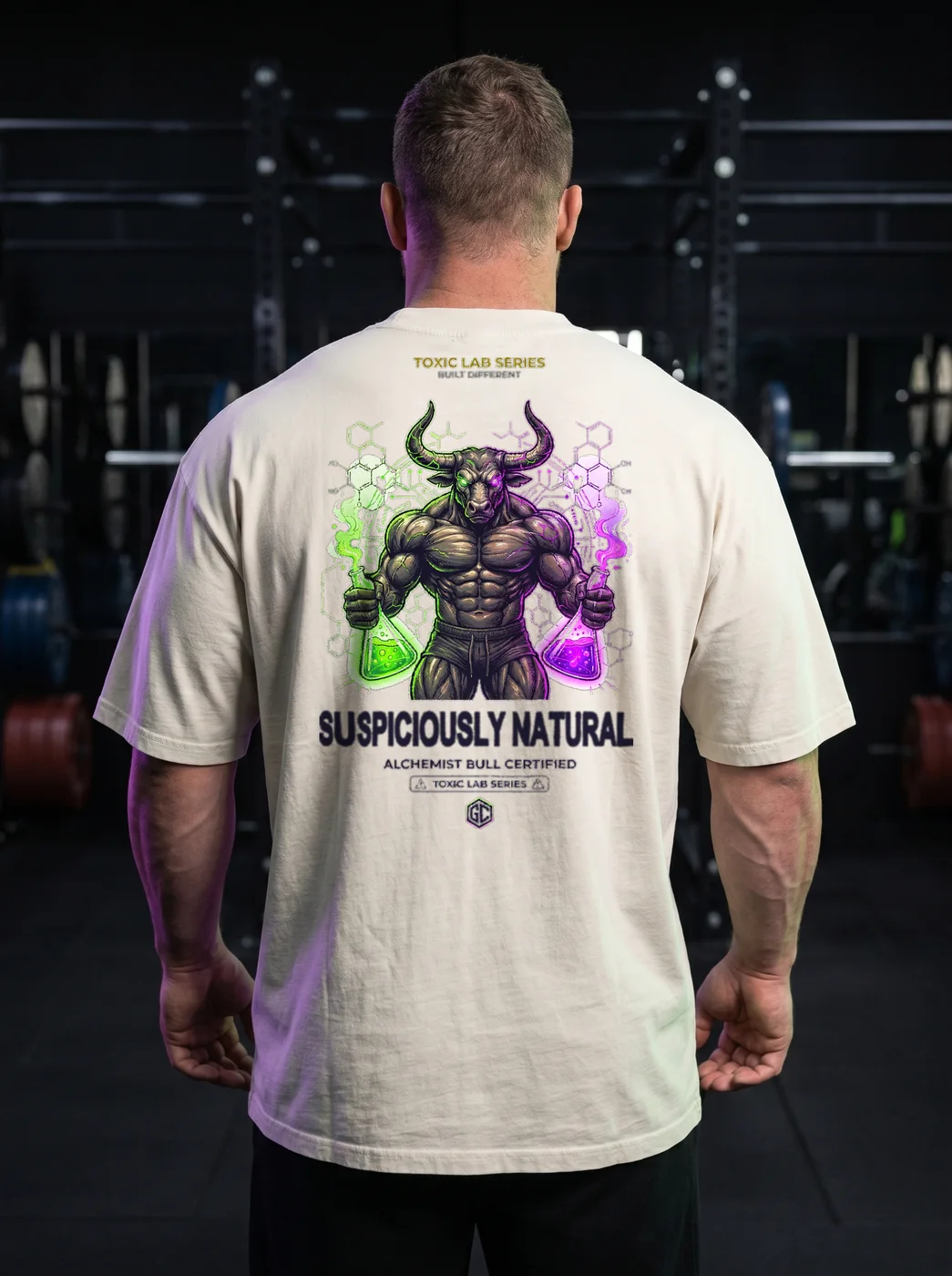
The cut is engineered, not just bigger
A real oversized tee is patterned from scratch: drop shoulders that land on the upper arm, a boxy body, a collar that sits right, a hem that ends mid-hip. That's design and grading work across every size.
The cheap version is a regular tee scaled up two sizes — longer sleeves, narrow shoulders, tent silhouette. Same 'oversized' label, completely different garment. The pattern is a big part of what you pay for.
The print has to survive the culture
A large back print done properly — cured right, on fabric heavy enough to carry it — stays put through chalk, sweat and four sessions a week. A cheap print cracks, fades and peels within a month.
When mockup and print file are matched one-to-one, what you saw is what lands on the shirt. That quality-control step costs money, and it's exactly what a discount three-pack skips.
Cost per wear, not cost per tag
The honest way to judge price is cost per wear. A cheap tee you retire in two months and a heavyweight you wear twice a week for two years are not the same purchase, even if the sticker says otherwise.
A shirt that keeps its shape, colour and print becomes a uniform — and a uniform you wear hundreds of times is cheap by the wear, expensive only at the till.
When it's NOT worth it
We'll be straight: if you want a plain undershirt to sweat through and bin, don't buy a heavyweight — you're paying for structure and a print you don't need. Buy the three-pack, no shame.
A premium gym tee is worth it when you want it seen: a statement piece you wear to train and out, that survives the wash and the accusations. That's the job it's built for.
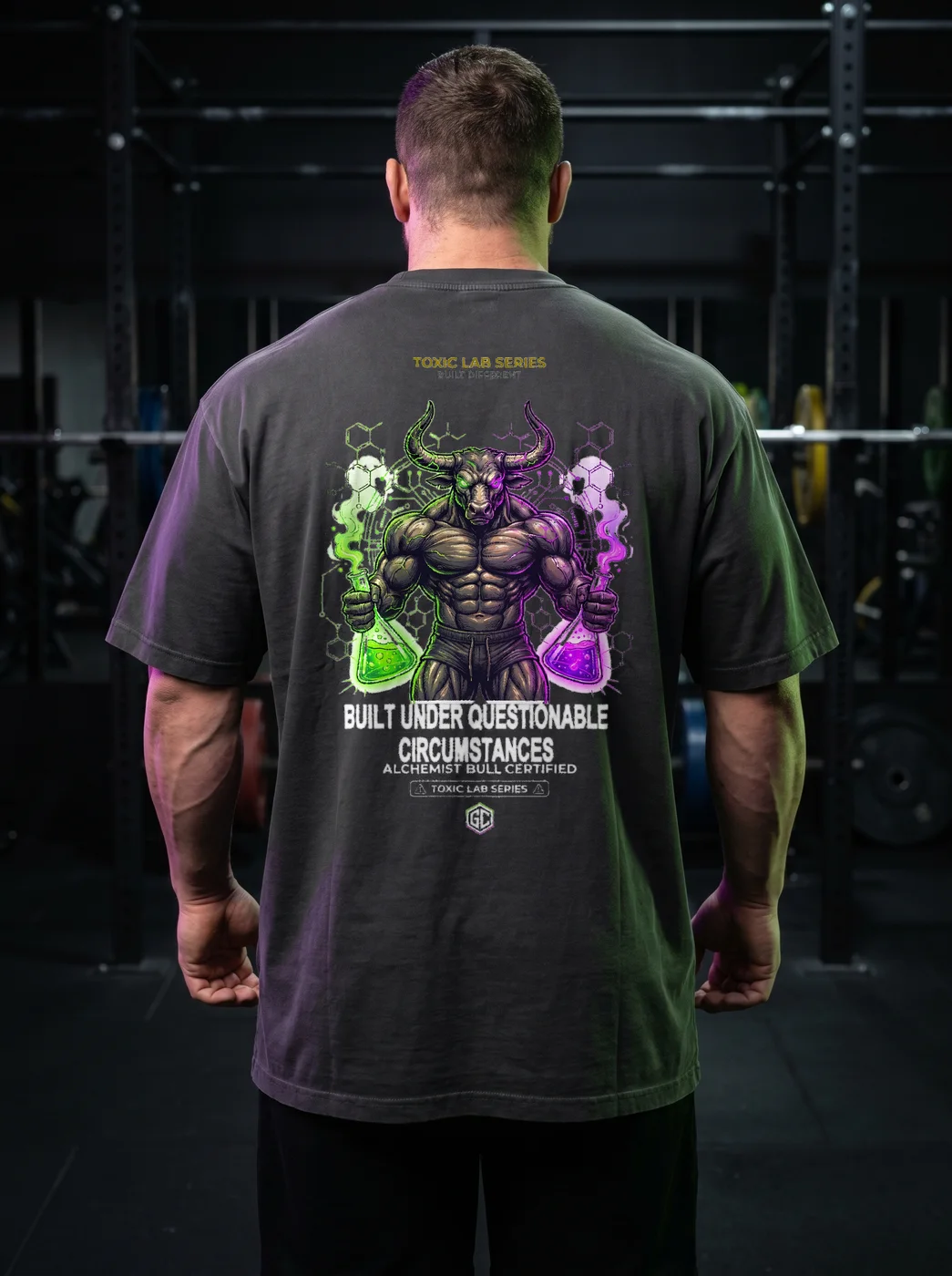
What you're actually paying for
Add it up: more and better cotton, an engineered oversized pattern, a back print built to last, and matched mockup-to-print quality control. That's the gap between a supermarket tee and one you'll defend.
Feel the weight once and the price stops being a question — it becomes the reason.