Lab Journal
Gym Tee Size Conversion: Cracking US to EU Sizes Fast
You order a Large because you've always worn a Large. It shows up looking like a crop top, or a tent, or — worse — the sleeves fit and the length doesn't. Congratulations, you've just met the international sizing system.
US and EU sizing were never built to agree, and heavyweight oversized cuts widen the gap instead of closing it. This is the no-tears version: what actually changes between US and EU, and how to land on your size the first time.
Why 'Large' Is Never the Same Shirt Twice
A US Large, a UK Large, and an EU Large are not the same shirt. The old rule of thumb was 'add one letter going from US to EU' — a US Medium became roughly an EU Large — but that rule was built for slim, fitted basics, not lab-grade heavyweight cotton.
Most international brands, ours included, size by actual body measurements now, not by whatever a letter meant in 1998. The label still says S, M, L — but the tape measure behind it is the only thing that doesn't lie.
The US-to-EU Cheat Sheet (Chest in cm, Not Vibes)
Skip the letter-to-letter guessing and go straight to chest width. A Small usually lands around 91–96 cm chest, Medium around 101–106 cm, Large around 111–116 cm, XL around 121–126 cm — always check the actual tee, not the assumption.
Those numbers shift by brand, cut, and how much oversized room is already baked into the pattern, which is exactly why the letter-to-letter conversion breaks down first on gym wear. Chest circumference beats country of origin every time.
Heavyweight Oversized Breaks the Old Rules
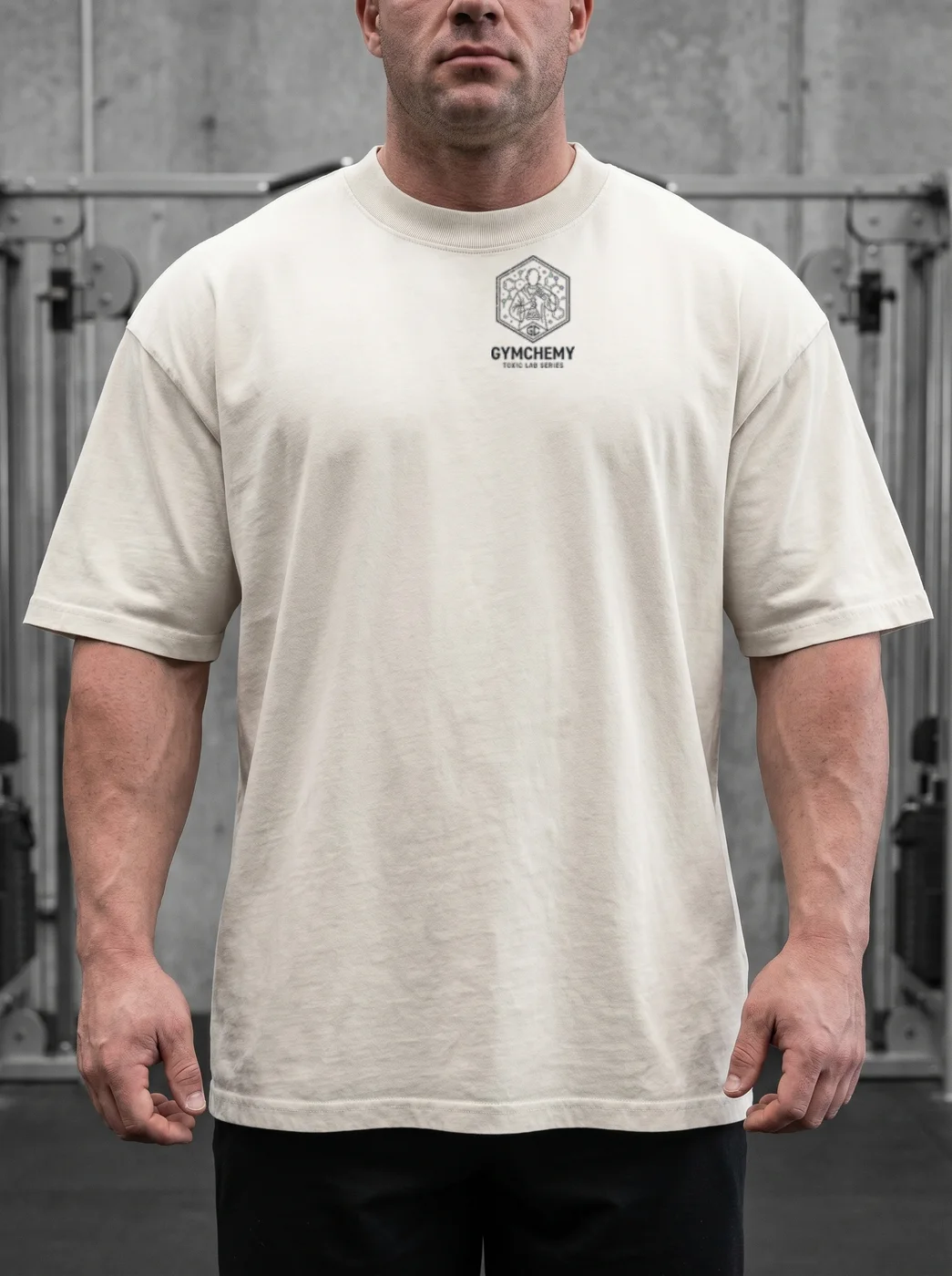
A boxy, drop-shoulder heavyweight tee doesn't behave like a fitted basic. The shoulder seam sits off your actual shoulder, the body skims instead of clings, and the fabric weight alone adds visual bulk no size chart can show you.
That's why 'I always take a Medium' is the sentence that gets people into trouble. The oversized pattern already has the room built in — sizing up on instinct on top of that is how a Medium becomes a poncho.
The Anti-Tears Method: Measure a Tee You Already Trust
Lay a tee you already own and love the fit of flat on a table. Measure pit-to-pit for chest width, collar-to-hem for length, and seam-to-seam across the shoulders. Three numbers, two minutes, zero guesswork.
Compare those three numbers to our chart in cm, not to whatever letter is on the tag. If the chest number matches, you're set — length and shoulder drop are what separate 'oversized on purpose' from 'accidentally wearing a dress.'
When You're Between Two Sizes
Heavyweight cotton shrinks a little on the first wash, so if you're between two chest measurements, sizing up usually serves the oversized silhouette better than sizing down. That's one of the rare cases where 'go bigger' is genuinely good advice.
The exception is length — if you're already on the shorter side, jumping a size can turn a hem that should sit mid-hip into one that competes with your shorts. When in doubt, prioritize the chest and shoulder numbers over length.
Order With Confidence, Not a Prayer
Once you've got your three numbers, ordering across borders stops being a coin flip. It doesn't matter if your last shirt came from a US mall or a EU rack — the tape measure is the only passport that matters.
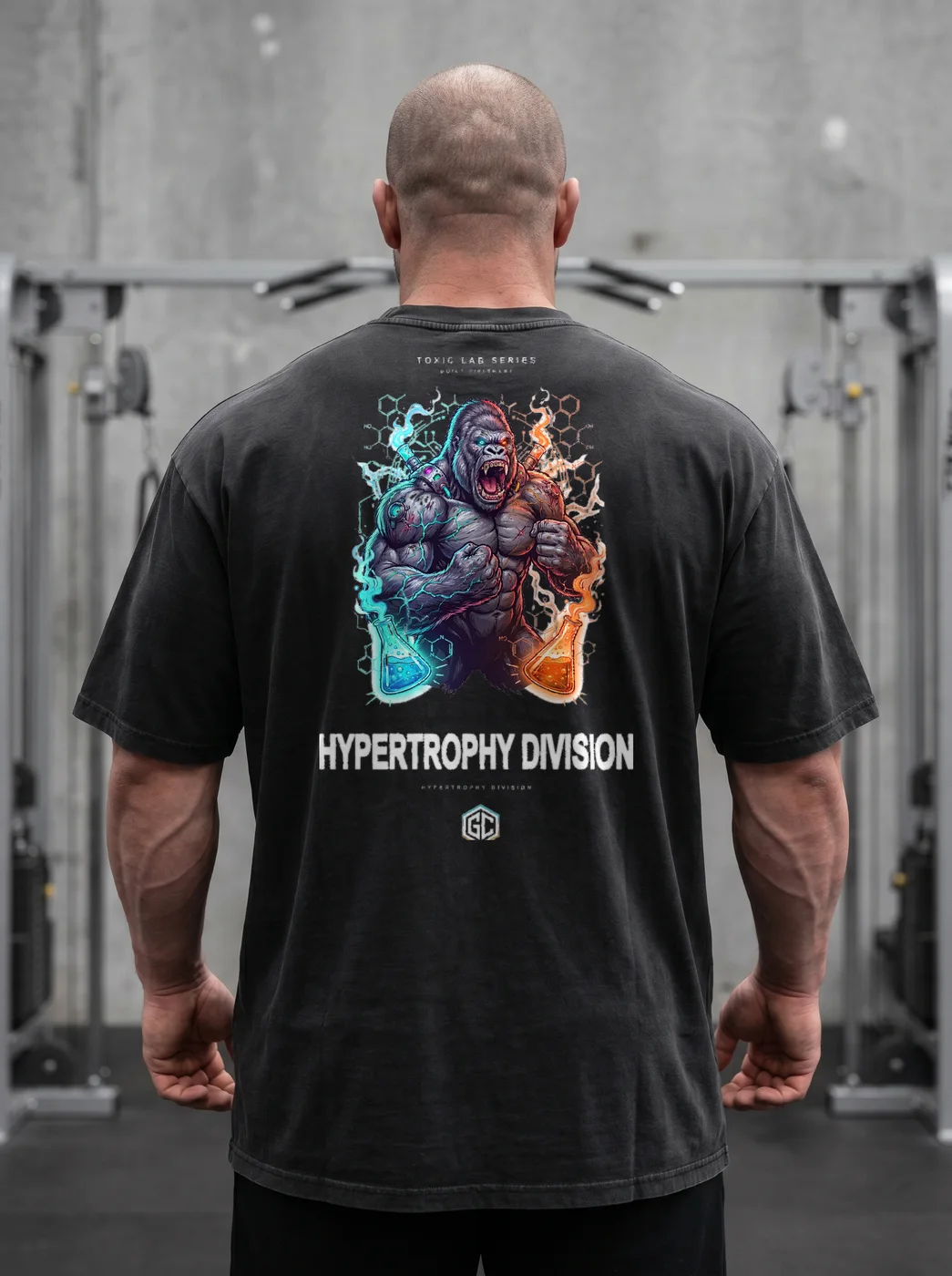
The print doesn't care what size you are. It just needs a chest wide enough to let a gorilla mid-transformation breathe. Get the fit right and the rest is just picking a colorway.