Lab Journal
Why Gym Tee Prints Crack (and Ours Don't)
You've had the shirt. The design looked great on day one, then a month later the back print is a cracked road map — lines splitting, letters peeling, the whole graphic going grey and stiff like dried paint.
That's not bad luck, it's cheap manufacturing meeting the reality of a gym wardrobe. Here's exactly why gym tee prints crack, and the honest reason ours are built to survive chalk, sweat and the washing machine.
Thick plastisol: a plastic layer sitting on top
Most cheap graphic tees use a heavy plastisol print — a thick layer of PVC-based ink that sits on top of the fabric like a sticker rather than living inside it. When it's laid on too thick and cured wrong, it becomes a rigid plastic sheet glued to a soft, moving surface.
Fabric stretches and folds every time you move; the plastic slab doesn't. So it does the only thing it can — it cracks along the fold lines, then flakes at the edges. The heavier and glossier the print feels, the more likely it is to split.
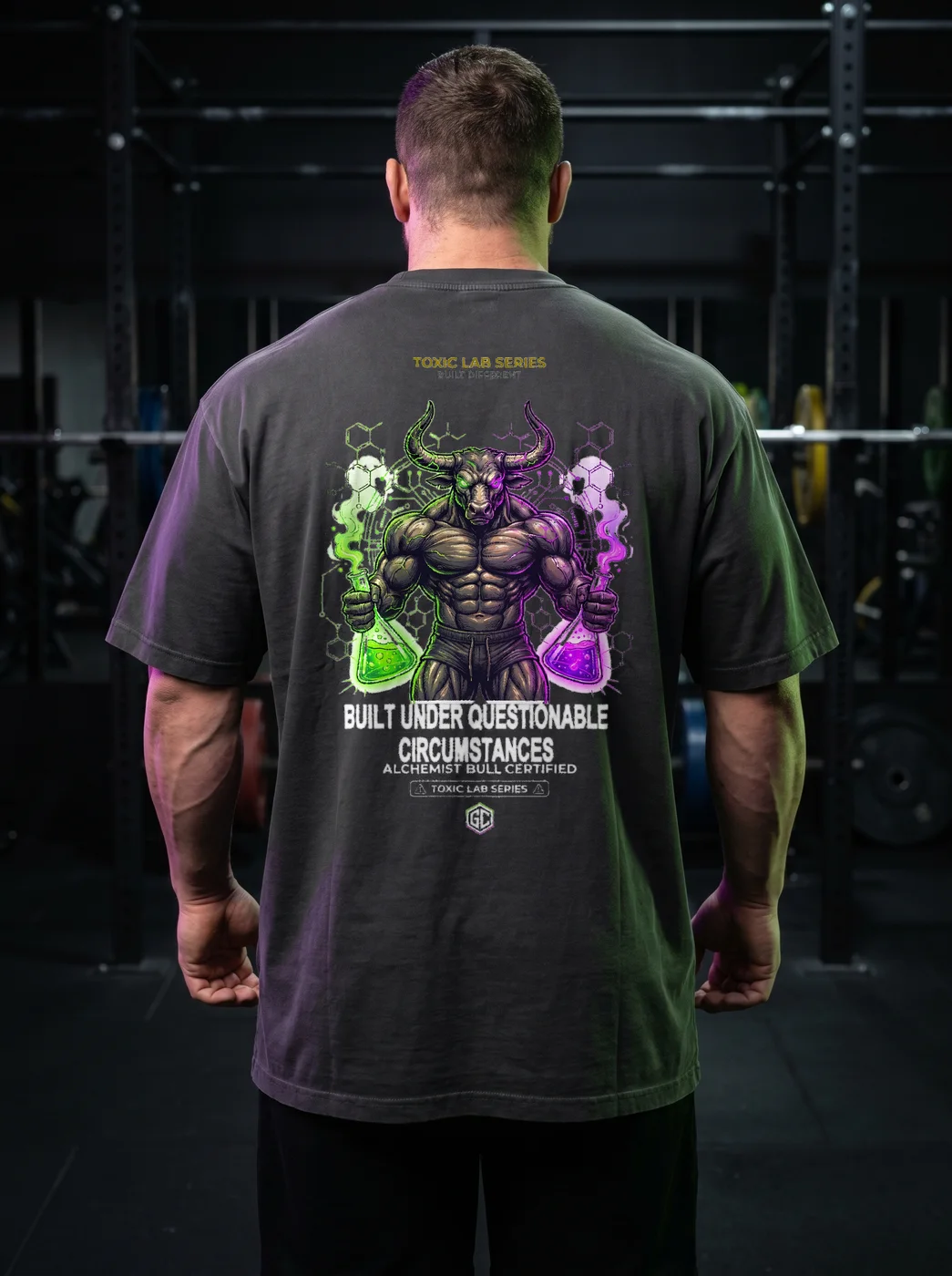
Thin cotton makes it worse
Now put that rigid print on 140gsm cotton — thin, flimsy, stretching in every direction under load. Every rep, every wash, every tug pulls the fabric one way while the plastic layer refuses to follow.
The lighter the shirt, the more it moves, and the more the print is asked to bend around folds it was never made to survive. Thin fabric and thick print is the exact combination that guarantees cracking — and it's what most budget gym tees are.
Wrong washes finish the job
Even a decent print dies fast under gym-laundry habits: a 60°C cycle, tumble dryer on high, ironed directly on the graphic. Heat softens and warps the ink, aggressive spin cracks it, and the dryer bakes those cracks in permanently.
Turning the shirt inside out, washing cold, skipping the dryer and never ironing the print buys years — but a print that needs babying that hard was fragile to begin with. Good print should tolerate a normal life, not demand a museum.
How a print that lasts is actually made
A durable print starts with the opposite choices: a controlled ink layer that flexes with the fabric instead of fighting it, cured at the right temperature so it bonds properly rather than sitting on top as a brittle crust.
Then it needs a base that doesn't sabotage it. Our prints go on a thick, heavyweight faded-wash cotton — dense fabric moves less and pulls less, so the print isn't dragged apart every time you move. Heavy base plus a properly cured print is the whole recipe for a graphic that ages instead of dying.
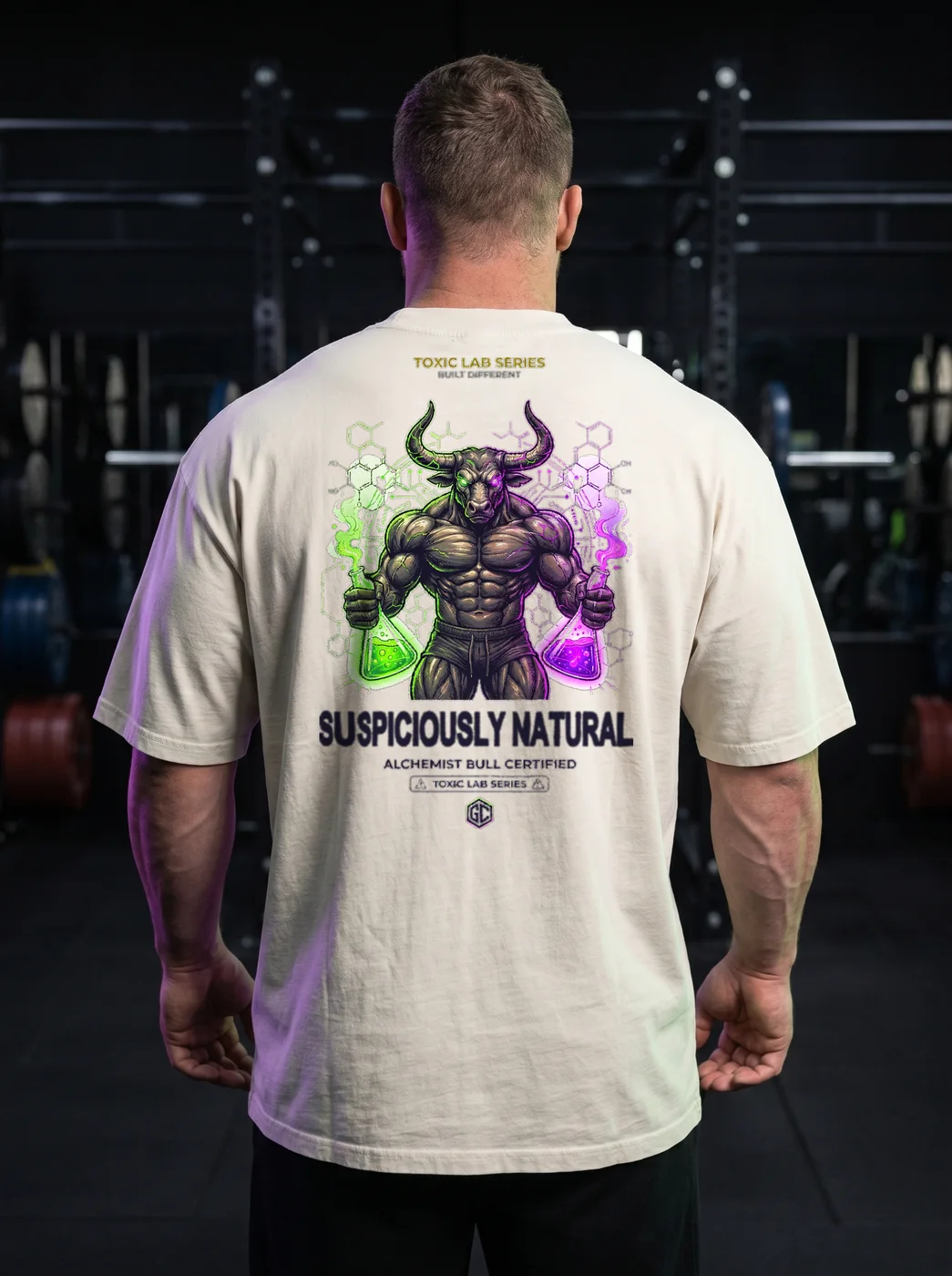
The honest part: it costs more, and here's why
We won't pretend this is free. Heavier cotton, a controlled cure and a large back print done properly all cost more than slapping thick plastisol on a 140gsm blank and shipping it. That's genuinely where the extra money goes.
But cost per wear tells the truth: a print that survives two years of training is cheaper than three cracked shirts you retire in three months. You're not paying for a logo — you're paying for the graphic still being there after the hundredth wash.